
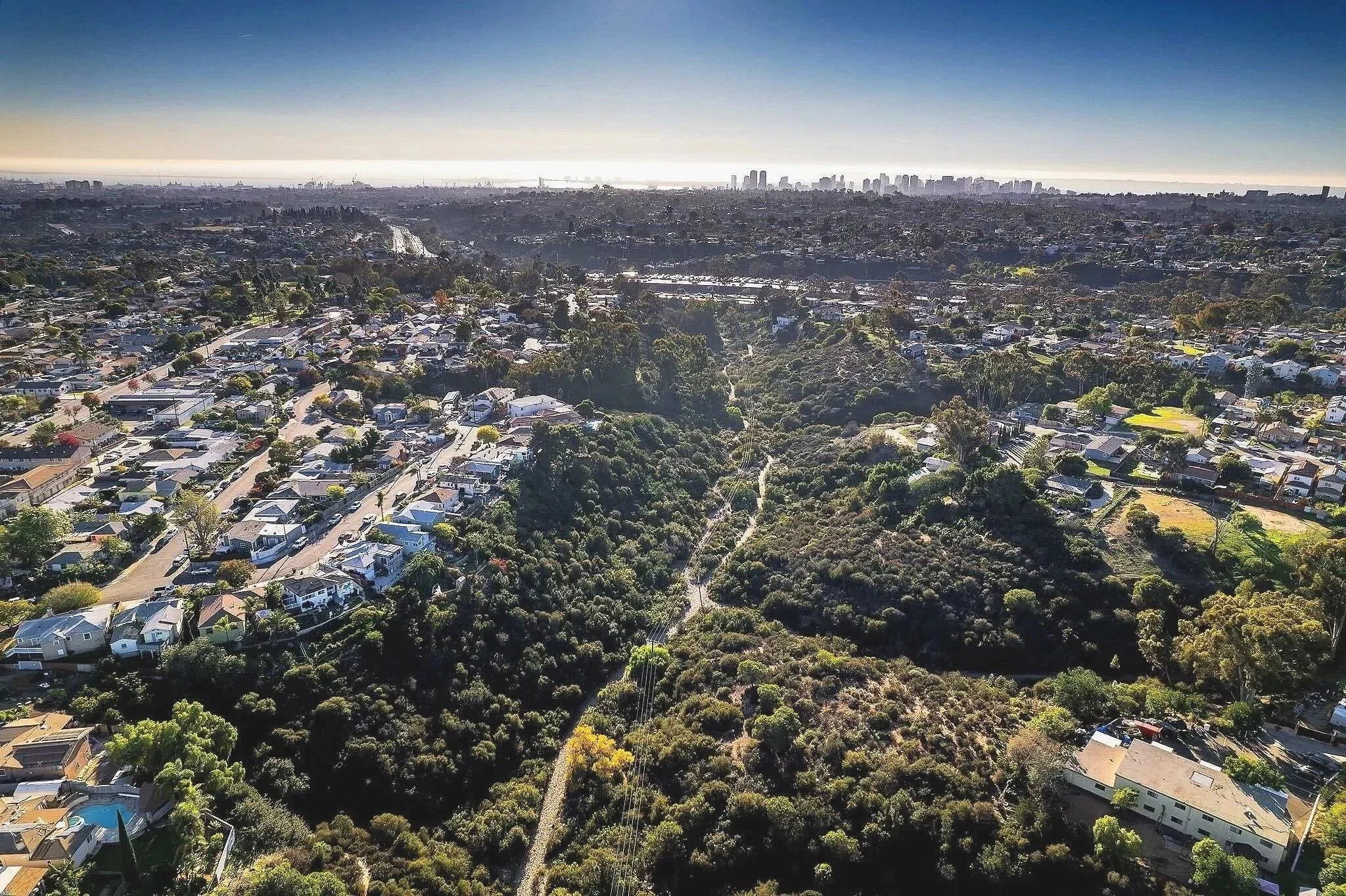
Streambed Enhancement
Ancient Landscapes, Modern Challenges: Erosion in Our Urban Canyons
What if we told you that you can walk along a streambed formed over 225 million years ago?
San Diego’s canyons are shaped by ancient geologic processes, with ephemeral streams that trace back to the region’s earliest natural history. These streams play a critical role in recharging groundwater reservoirs and filtering runoff before it reaches the ocean. But the forces shaping our canyons and creeks today are not just natural—they’re increasingly influenced by human infrastructure.
City infrastructure like stormwater systems and sewer lines (located at canyon bases), have impacted these ephemeral streams flowing through the canyons’ streambeds. During and shortly after rain, the funneling of stormwater into our canyons can make these streams flow strongly. This can result in loss of native habitat and soil stability, degradation of stream corridors, threats to urban infrastructure, and declines in water quality.
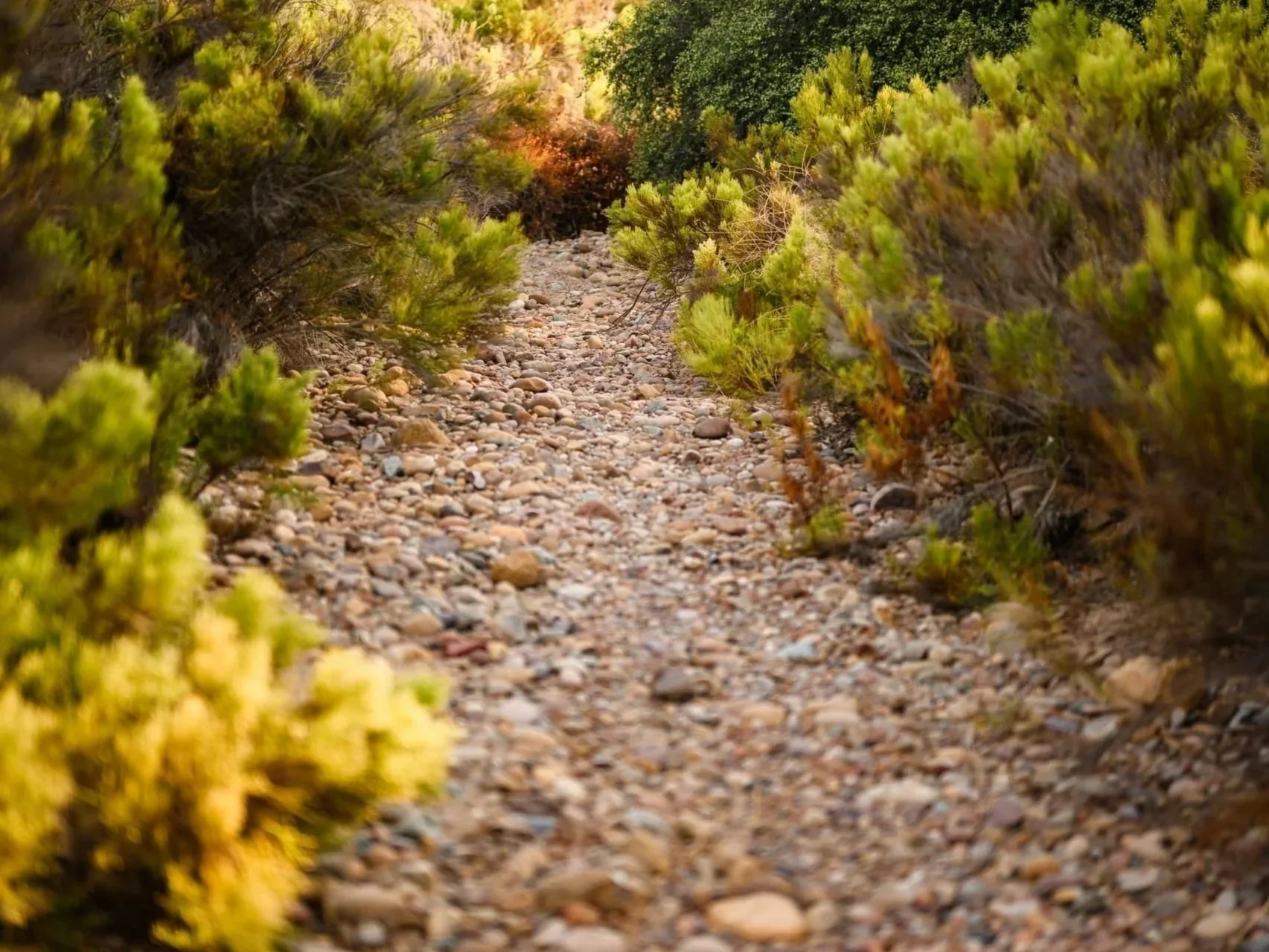
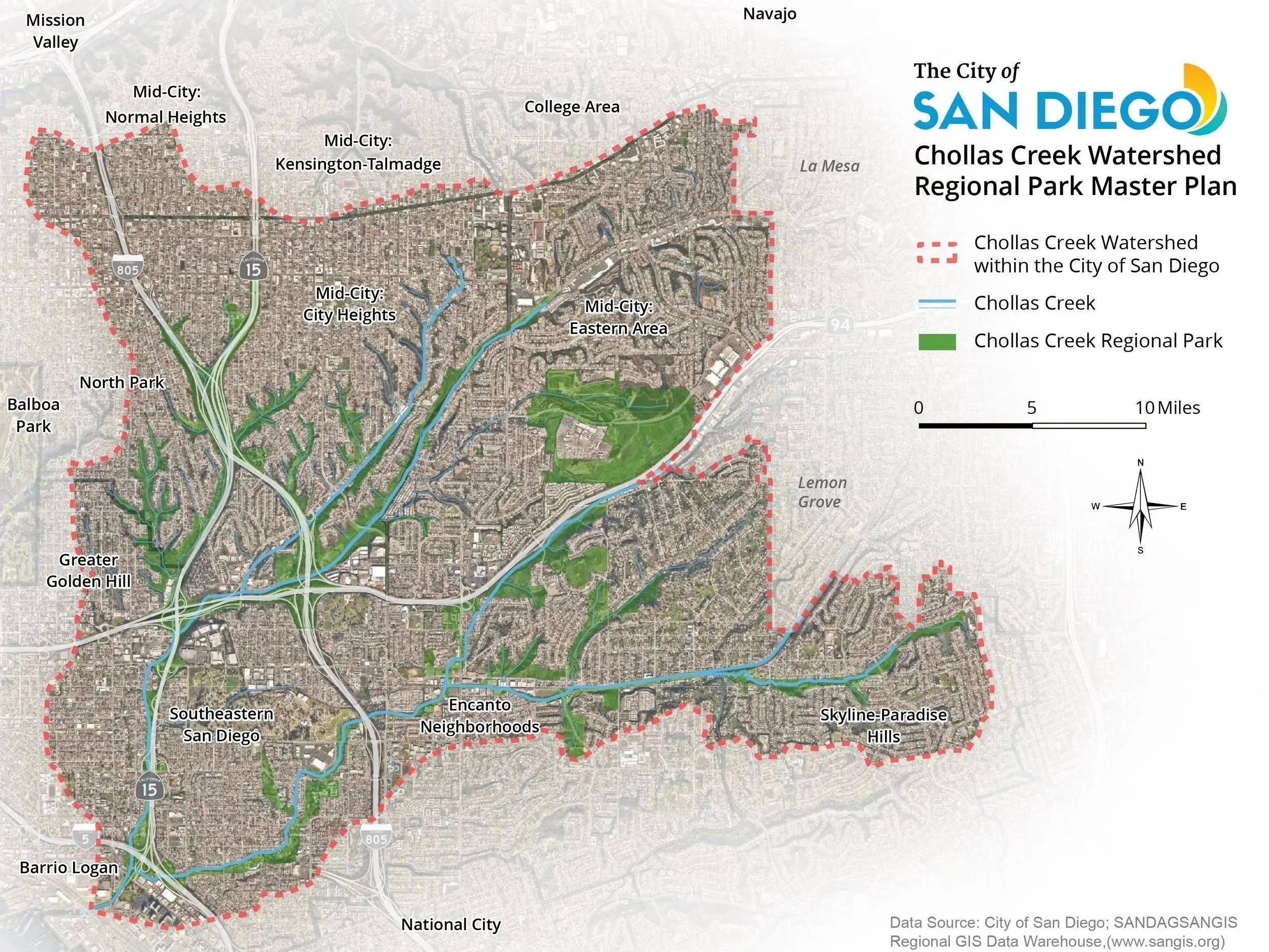
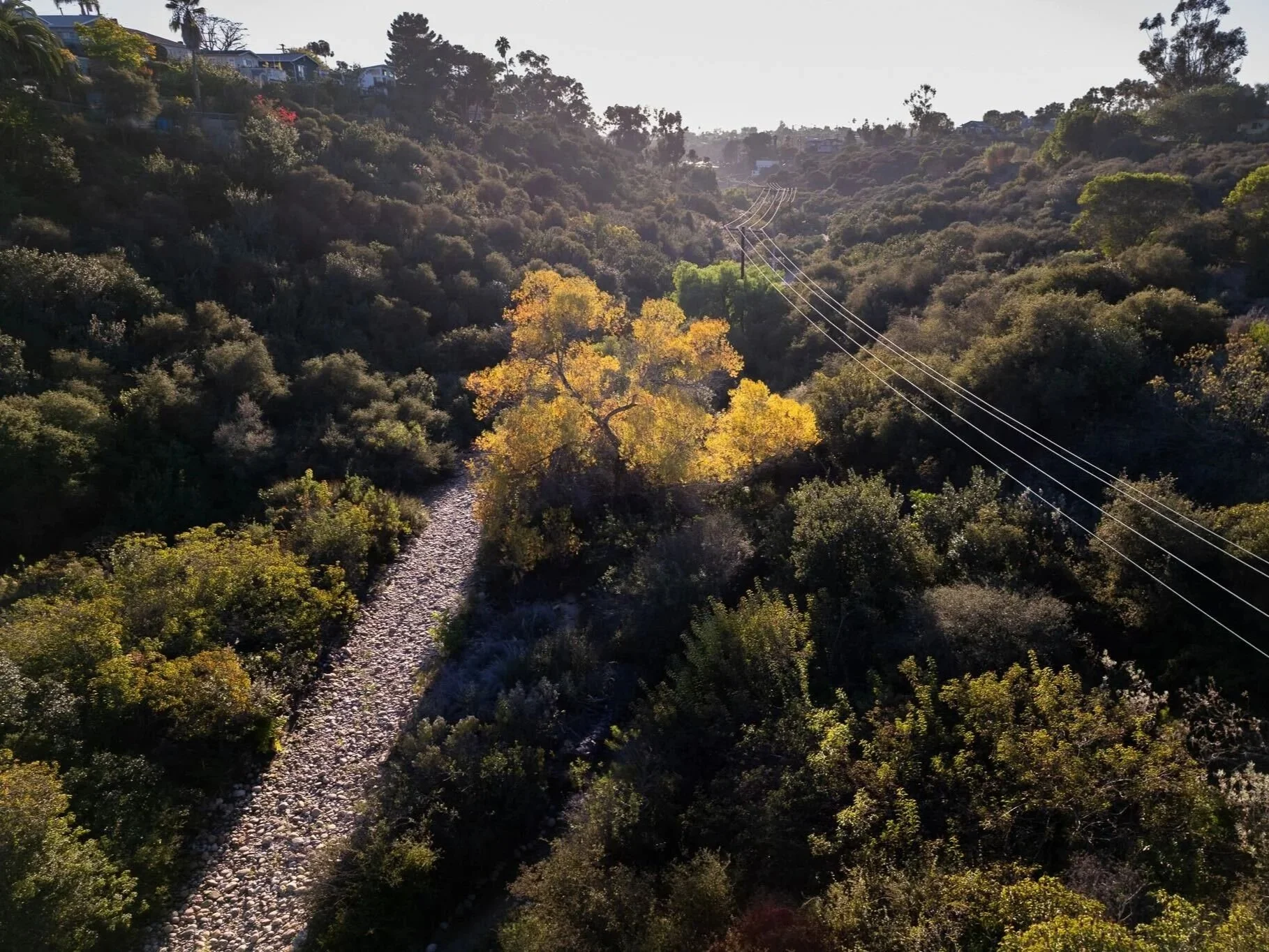
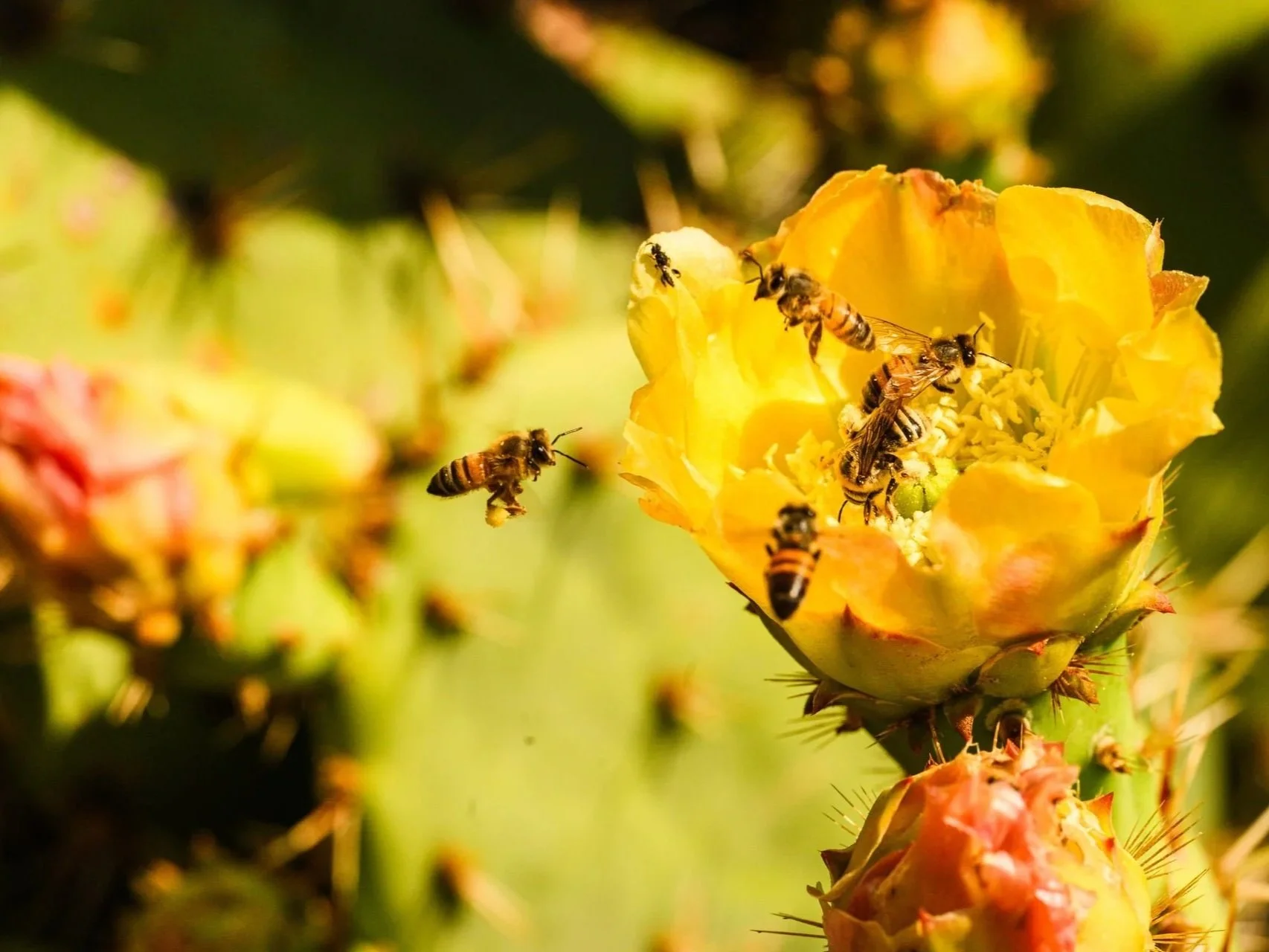
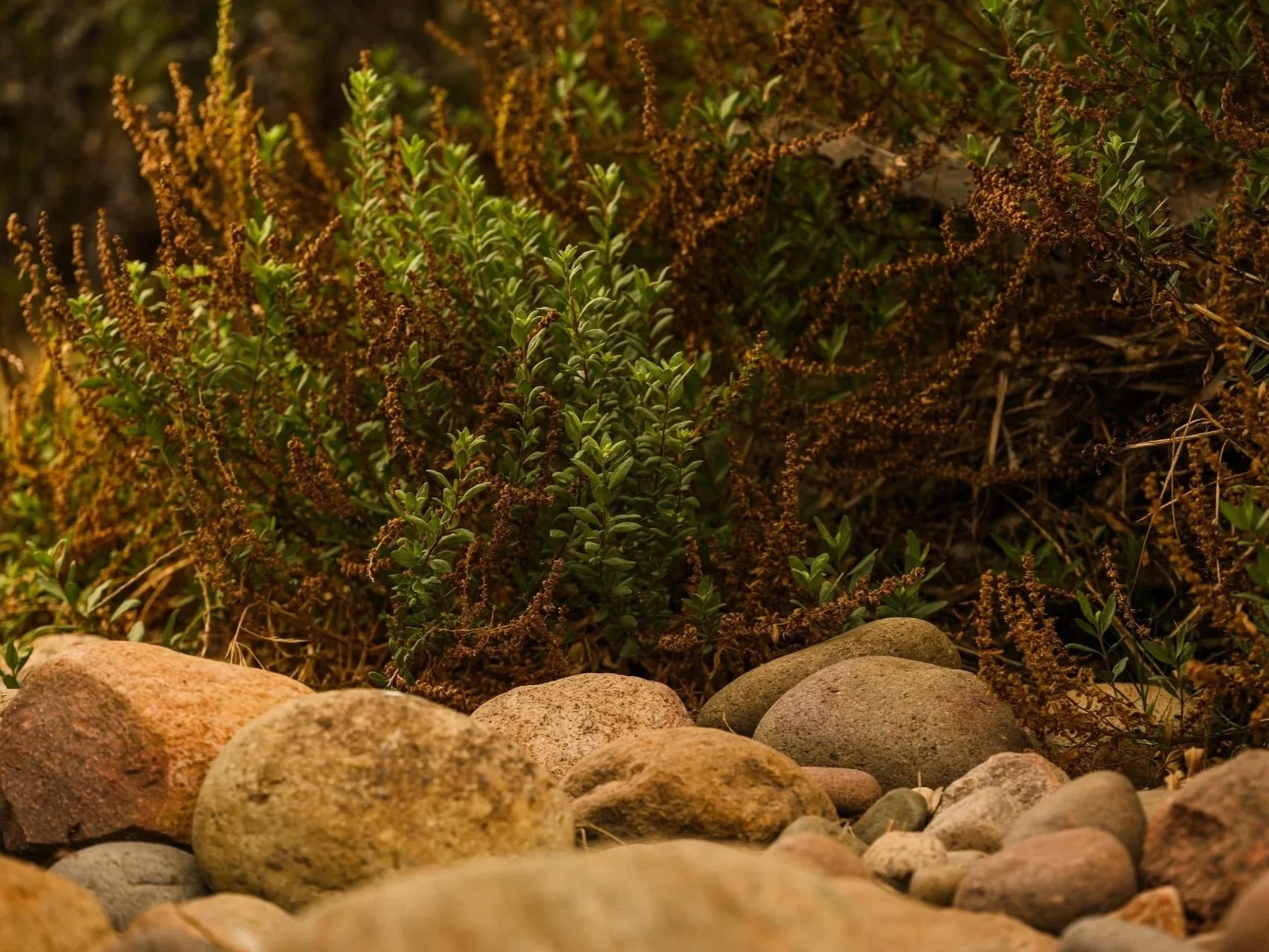
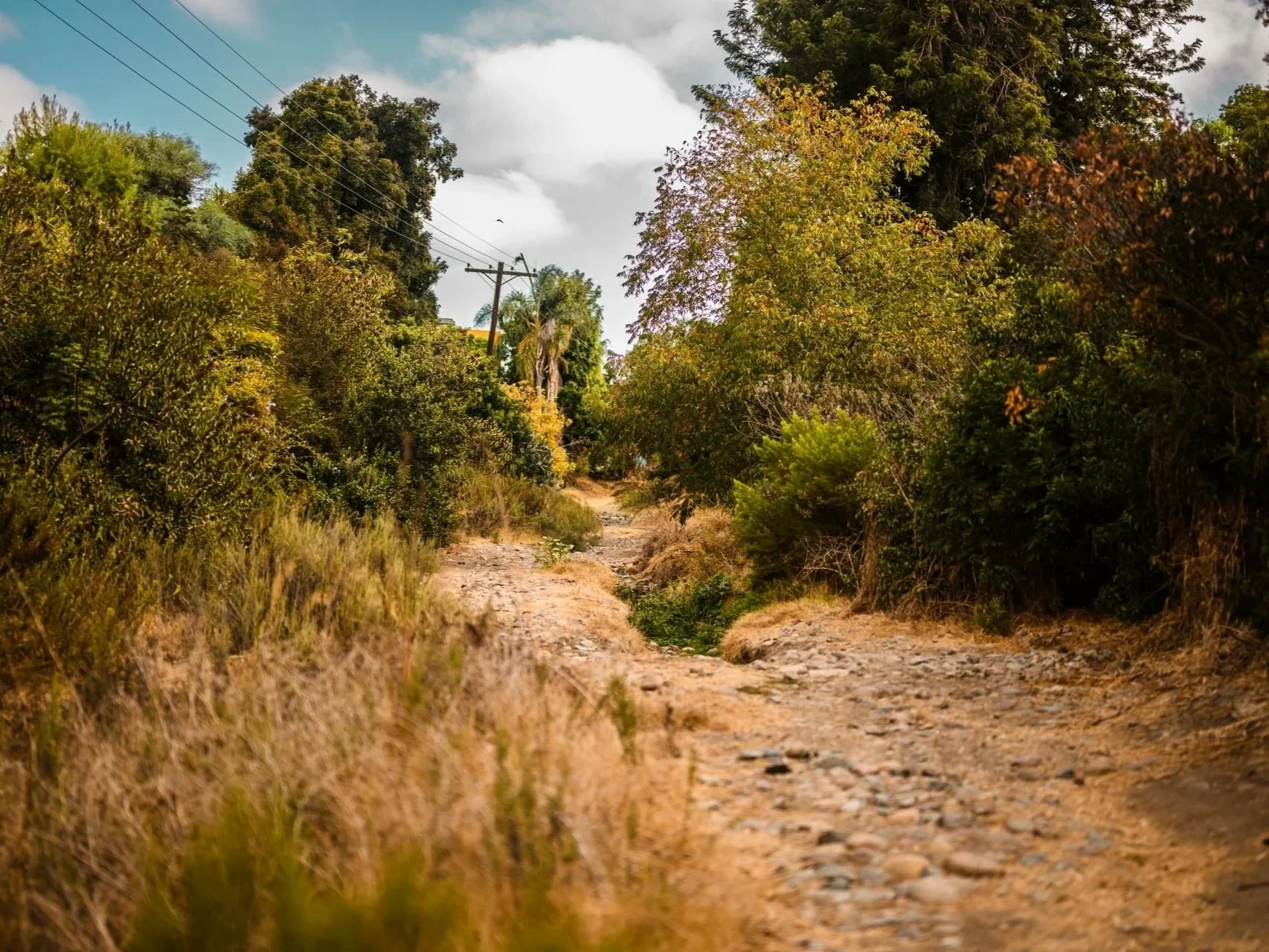
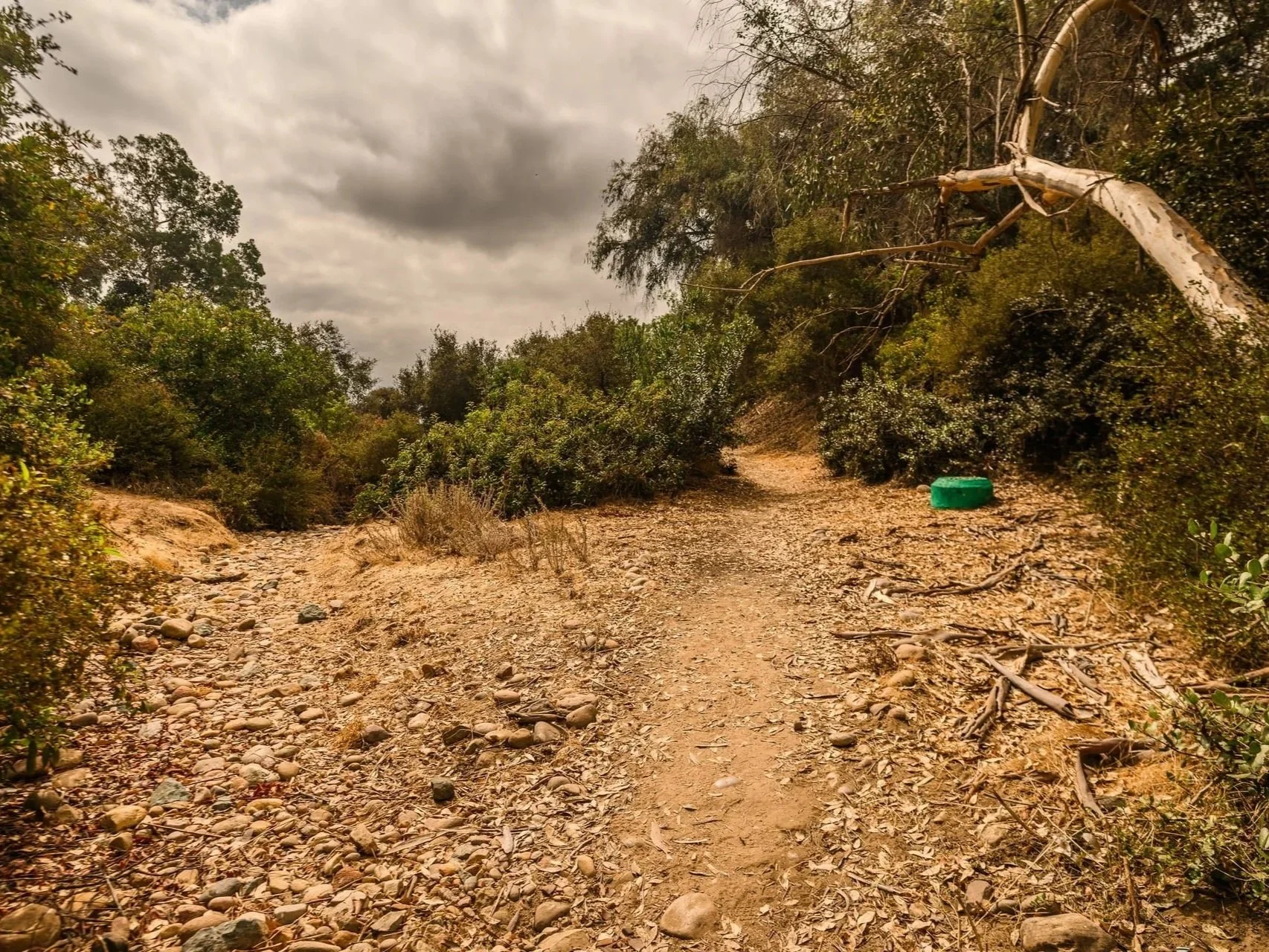
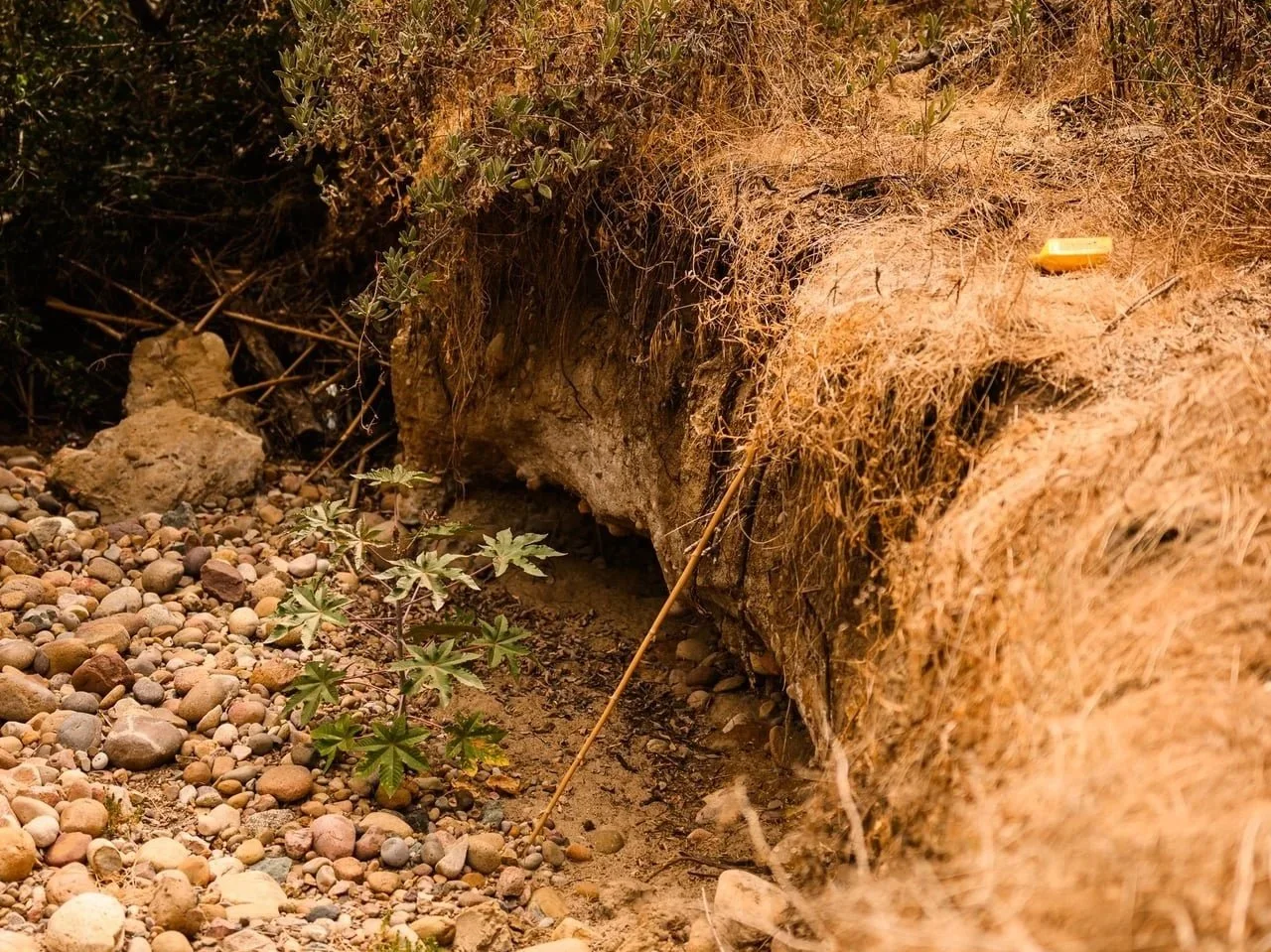
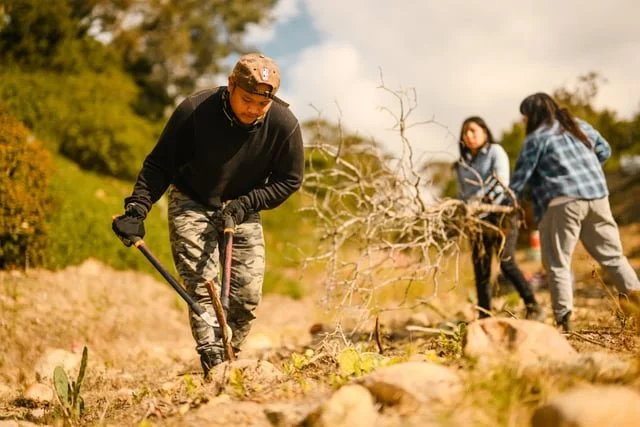
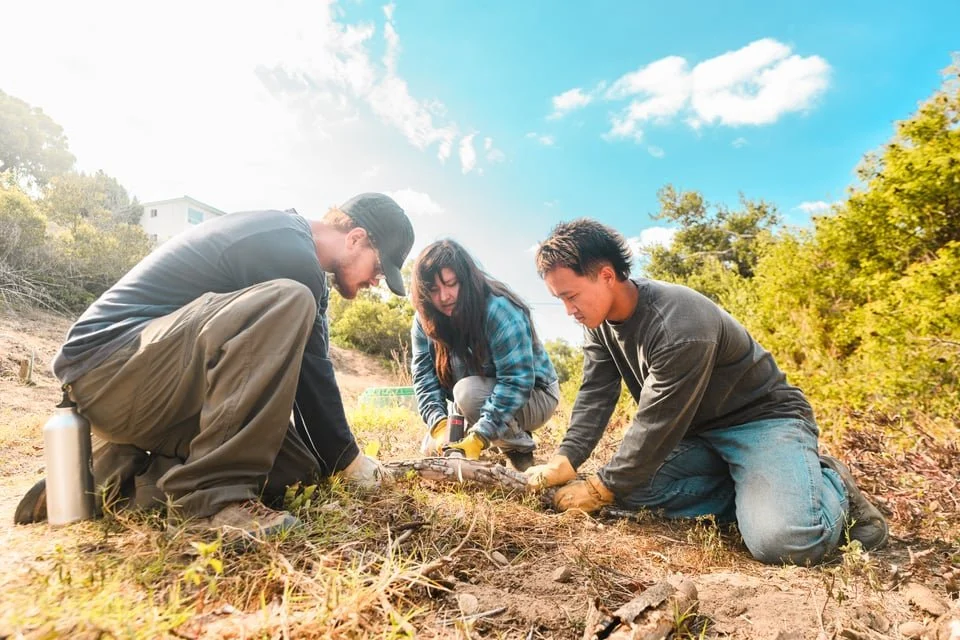
At San Diego Canyonlands, we apply best ecological practices to stabilize eroding streambeds and restore their natural function. One approach is streambed bioremediation—the use of natural materials, vegetation, and geoengineering to reduce pollutants, control erosion, and rebuild healthy hydrology.
Streambed Enhancement Project
Manzanita canyon
The Manzanita Greening and Canyon Health Project is a community-driven effort to restore the natural health of Manzanita Canyon, one of City Heights’ cherished open spaces. Years of urban runoff have caused erosion, sediment buildup, and habitat loss during rain events, threatening the creek, native plants and wildlife, and nearby infrastructure. Working in partnership with the City of San Diego, San Diego Canyonlands will use nature-based creek restoration and native plantings to stabilize the canyon, improve water quality, reduce flooding and erosion, and create a healthier, more resilient habitat for people and wildlife alike. This project is funded by the California Urban Greening Grant and is designed to strengthen the canyon’s ability to adapt to future climate impacts.
Project Goals:
Stabilize the creek and canyon slopes to reduce erosion and sediment buildup
Improve stormwater management, water quality, and urban runoff infiltration
Restore native plant communities and remove invasive species
Enhance habitat for native wildlife, including sensitive and protected species
Protect public infrastructure, including sewer and water lines, from erosion and flooding
Increase climate resilience by creating a more stable, drought-tolerant, and flood-resilient canyon
Preserve public access and ensure compatibility with existing trails and utilities
Project Timeline*:
2020-2023: Conducted community engagement to understand community priorities. Developed the City Heights Urban Greening Plan using community feedback to create a proposal that aligns with local needs and concerns. San Diego Canyonlands was awarded the the California Urban Greening Grant.
2023-2025: San Diego Canyonlands completed the restoration plan for Manzanita Canyon, integrating both engineering and ecological design to bring the canyon back to health. The project established strong partnerships with City departments and local community organizations, ensuring collaboration across Storm Water, Parks and Recreation, and Public Utilities teams. All necessary environmental approvals and permits were secured, and nature-based restoration methods, including native plants and bioengineered creek stabilization, were selected to improve the creek, protect infrastructure, and enhance wildlife habitat. Pre-construction preparations such as utility coordination and site access planning from Thorn Street are ready to support the next phase of work.
Early 2026: Site preparation, including nonnative tree removal, invasive plant removal, native seed broadcasting, and general maintenance/clean-up of restoration sites.
Spring - Summer 2026: Fuel reduction and continued invasive species management.
Autumn 2026: Streambed grading, installations of bank and creek stabilization features.
End of 2026: Native plant restoration, including planting of 240 native trees.
2027 - 2031: Post-restoration monitoring and maintenance.
*Last Updated: February 17, 2026
Getting Involved:
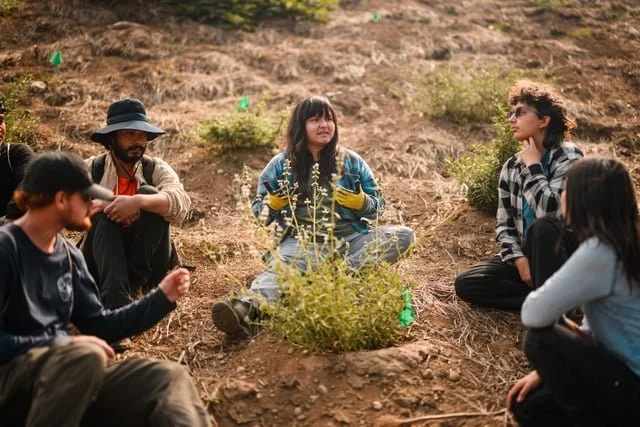
Our community is at the heart of everything we do! Throughout the project timeline, we plan to host volunteer events where community members can walk the canyon, learn about the work underway, and even take part in hands-on restoration activities. This page will be updated as new opportunities become available, including seed broadcasting, bird watching, and watering.
In the meantime, here are a few ways you can learn more and get involved:
Subscribe to our newsletter.
Sign up for a volunteer event and come hang out with us in the neighboring City Heights canyons.
Follow us on Instagram for more consistent updates on project progress and our other programs.
If you have any questions, comments, or concerns regarding the Manzanita Greening and Canyon Health Project, please submit them here and we will get back to you as soon as possible.
Erosion Control project
Erosion leads to the loss of land and creation of ditches and gullies, taking away precious habitat from our plants and animals. At San Diego Canyonlands, we manage erosion in our canyon environments by securing slopes and supporting healthy streambeds.
Mission Hills canyon
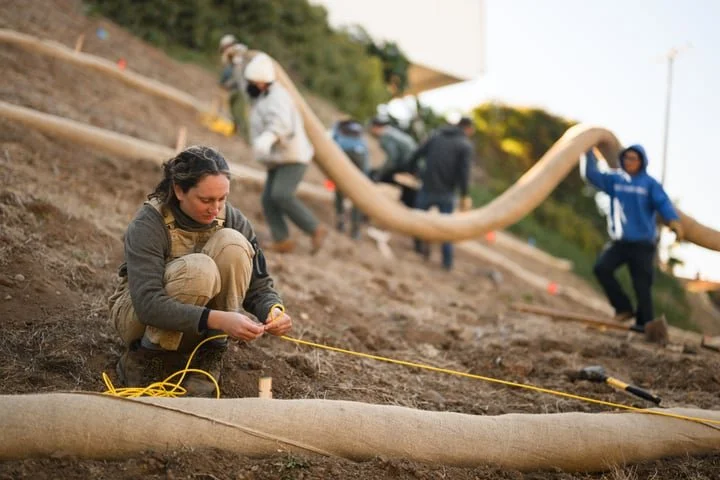
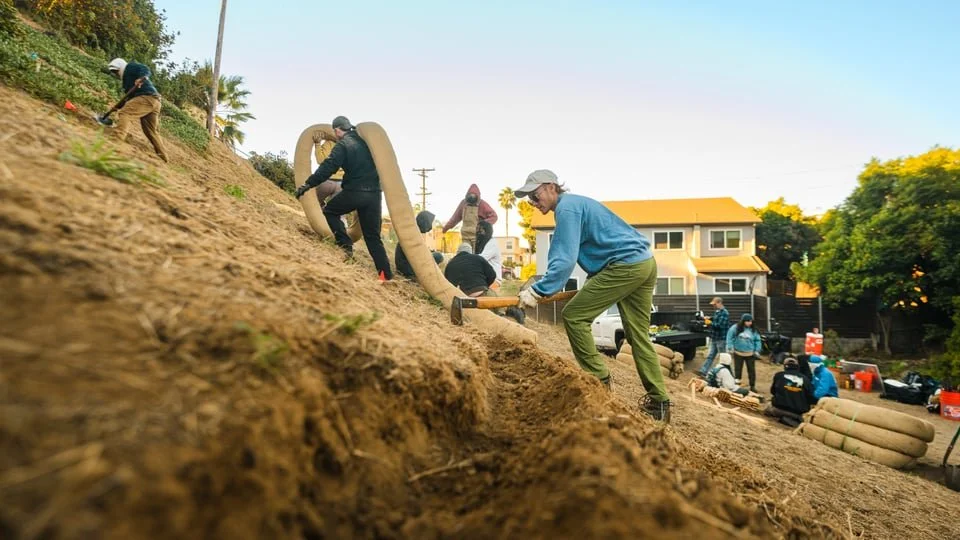
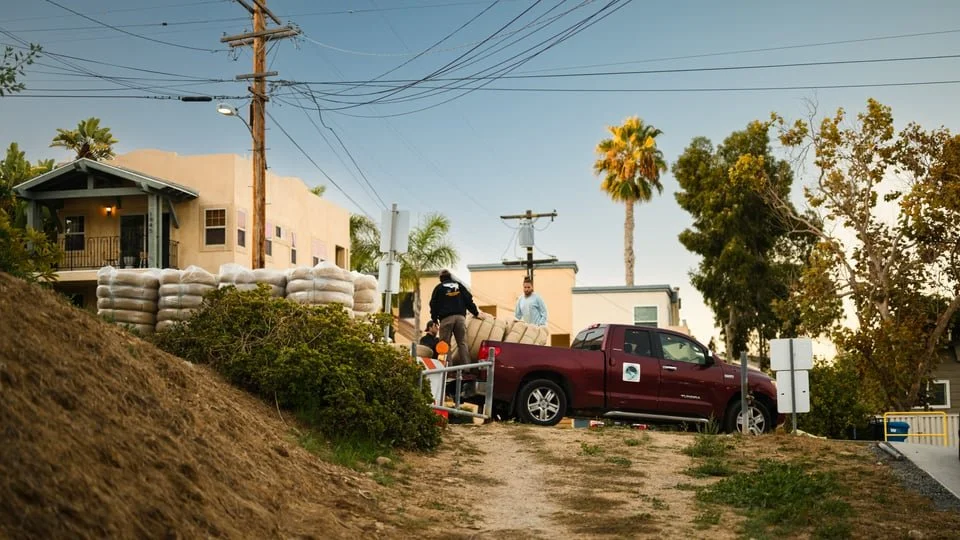
Within the neighborhood of Mission Hills is nestled a beautiful urban canyon. Mission Hills Canyon is the site of a multi-phase restoration project aiming to target hillside erosion and control invasive species.
Beginning in 2023, the Mission Hills project has:
planted 680 native plants
removed 7,000 lbs + of non-native and fire fuel vegetation removed
installed 2,650 ft of fiber rolls for erosion control
created 10+ workforce opportunities
hosted 15+ volunteer events, with volunteers continuing to meet every other Friday morning
With the foundation of the project set, the next phase will implement streambed geoengineering practices.
How you Can help
We all play a part in protecting our environment. While root causes of erosion lay in structural planning, taking individual action can help our environment become more resilient.
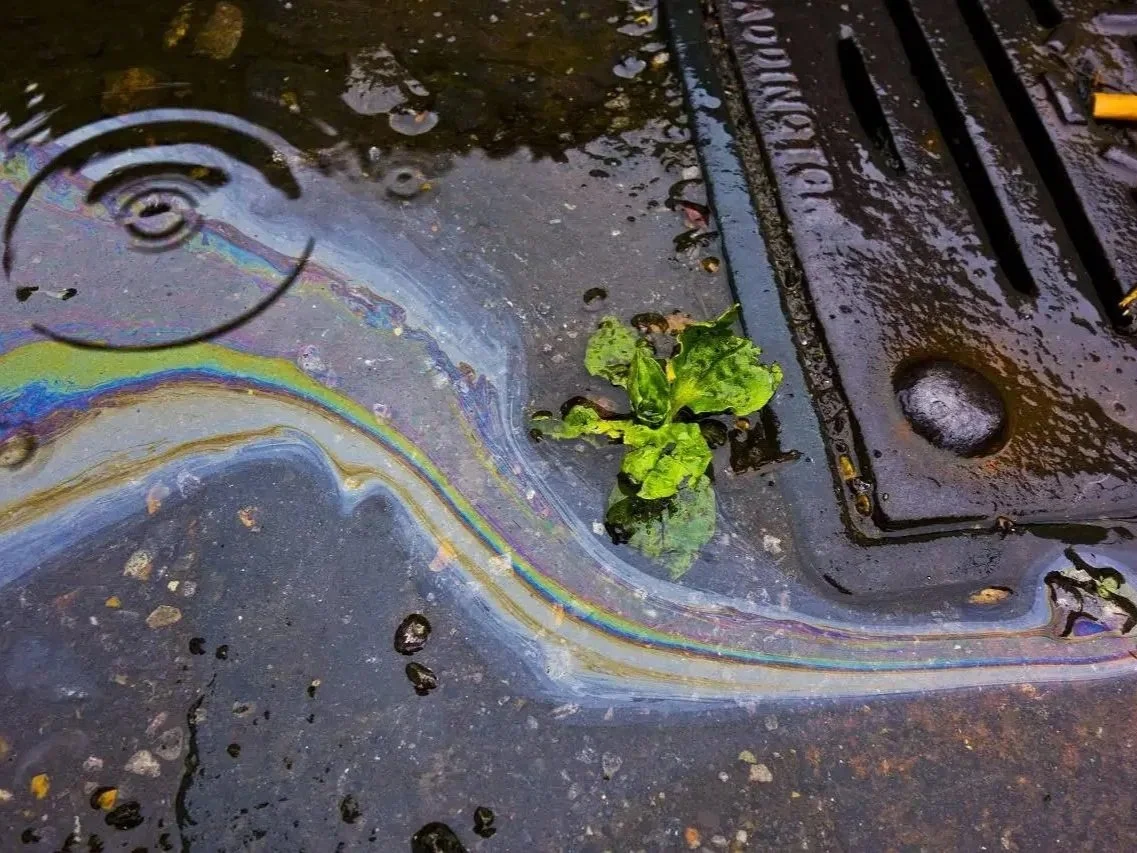
Oil and pollutants entering waterways. Photo courtesy of Insauga Local News.
Lawn and Driveway Care:
Take a trip to the car wash! Washing your car at home allows contaminated runoff to enter storm drains, but car washes have systems in place to dispose of the soapy water.
If using pesticides or herbicides, opt for eco-friendly options, keep use concentrated to targeted species, and avoid spraying on windy or rainy days.
Switch to native gardens and landscaping! Grass lawns require significant amounts of water and provide little to no habitat for our urban wildlife.
Trail Etiquette:
Stay on the trail! Traveling off the trail or on ‘social trails’ can lead to further erosion and environmental degradation.
Avoid hiking following the rain. Muddy trails pose a fall hazard to hikers, and can erode quickly.